

Commercial floor care guide · Published November 11, 2026
The short answer: what a commercial floor maintenance plan includes
A commercial floor maintenance plan lists every floor in your building, what your staff does daily, what a professional does and how often, and a fixed price for each visit. At Hank's Carpet Cleaning the walkthrough to build that plan is free, the written price comes the same day, and repeat visits keep that price for 12 months.
That's the whole idea in one paragraph. The rest of this guide walks through each piece: the three layers of floor care, how often carpet, VCT, tile and vinyl plank need a professional, what public bids in Dallas and Tarrant County show about cost, why a small building never pays those prices, and a simple way to set a yearly budget you can take to a board, an owner or a property manager.
- A floor inventory: every room or zone, the floor type and roughly how many square feet.
- Traffic levels for each zone: heavy (entries, main halls), medium (classrooms, offices) or light (storage, back offices).
- Daily and weekly care your own staff or janitorial service handles: vacuuming, dust mopping, damp mopping, spot cleaning.
- Periodic professional cleaning: what gets done, in which zones, and how many times a year.
- Restorative work when a floor needs a full reset: a deep carpet cleaning or a VCT strip and wax.
- A schedule that fits your building's hours: after hours, weekends or around events.
- A fixed price per visit, the length of the price lock and the cancellation terms, in writing.
What are the three layers of floor care?
Every floor plan has three layers: daily care that keeps grit off the floor, periodic professional cleaning that removes what daily care can't, and restorative work that resets a floor that has slid too far. A plan works when each layer has an owner and a schedule.
Most buildings already do the first layer. The janitorial service or the staff vacuums and mops. What usually goes missing is the second layer, so the floors slowly get duller until someone calls for the third layer, the most expensive one. A written plan exists mainly to keep that middle layer on the calendar.
- Daily and weekly (your staff or janitorial service): walk-off mats, vacuuming, dust mopping, damp mopping with a neutral cleaner, blotting spills.
- Periodic (a floor care company like Hank's): machine scrubbing of vinyl plank and tile, low-moisture or hot-water carpet cleaning, VCT scrub and recoat, upholstered seating.
- Restorative (as needed): VCT strip and wax, heavy carpet cleaning after a season of traffic or neglect, tile and grout deep cleaning, grout color sealing.
Isn't floor care part of our janitorial contract?
Usually only the daily layer is. A typical janitorial contract covers vacuuming, dust mopping and damp mopping on a nightly or weekly schedule, while machine scrubbing, carpet cleaning, strip and wax and grout work are either left out or listed as extra-cost add-ons. Read the scope line by line before you assume the floors are covered.
That isn't a knock on janitorial crews. Nightly cleaning and periodic floor care are different jobs with different equipment: an orbital floor machine, a low-moisture carpet machine, a truck-mounted extractor, stripping pads and finish. Many buildings keep their janitorial service for the daily layer and hire a floor care company for the periodic and restorative layers, and the plan simply spells out who does what so nothing falls in the gap between them.
If your janitorial contract does include periodic floor care, put its frequency in your plan anyway. A clause that says floors are scrubbed "as needed" tends to mean they're scrubbed when someone complains.
How often should commercial carpet be professionally cleaned?
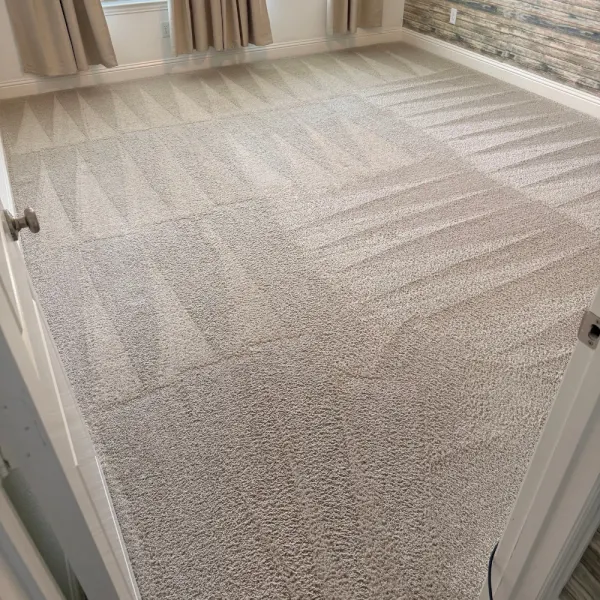
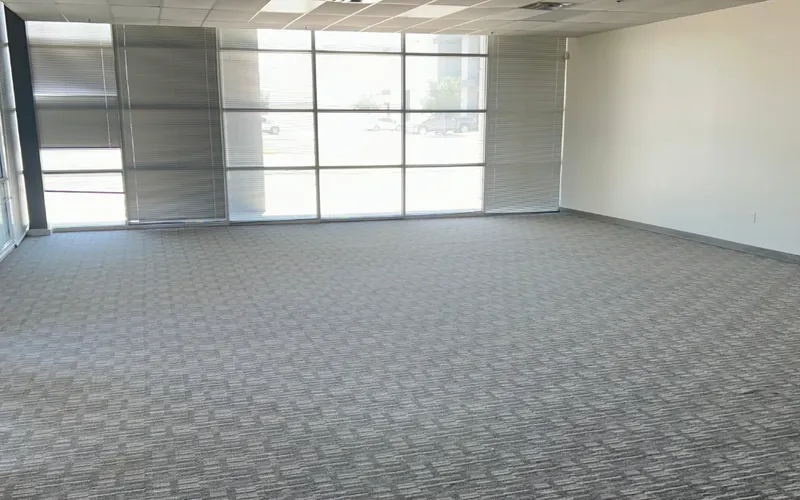
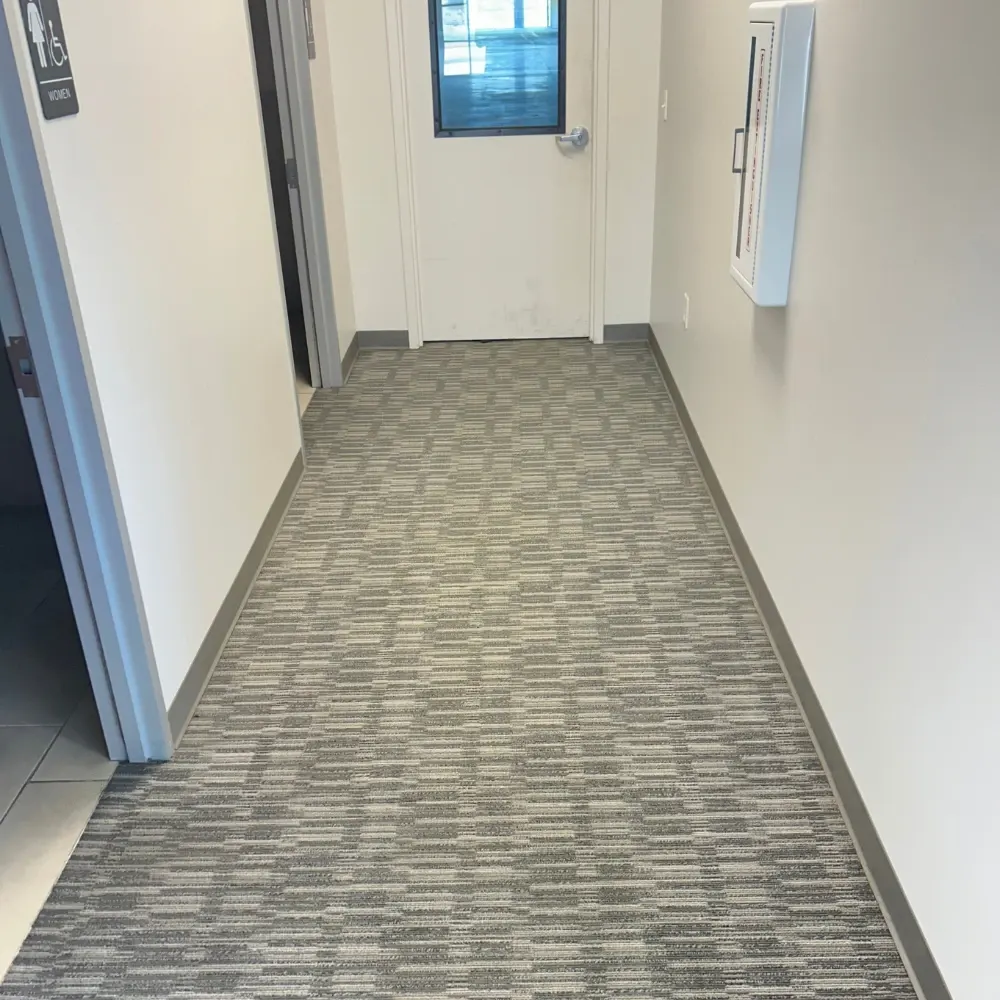
Commercial carpet should be cleaned by a professional on a schedule set by foot traffic: the busiest areas most often, quiet rooms least. The Carpet and Rug Institute recommends vacuuming high-traffic areas daily, medium-traffic areas twice a week and light-traffic areas weekly, plus a professional deep cleaning every 12 to 18 months at the least.
That 12 to 18 months is a floor, not a target. An entry that a few hundred people cross each day loads up with soil much faster than a back office. In a plan we treat each zone on its own: the entry, the main hallway and a daycare classroom may be cleaned several times a year, while a conference room that's used twice a week can wait longer. It costs less to clean the busy paths often than to clean the whole building on the schedule of its busiest hallway.
Our main carpet method is low-moisture cleaning, and carpet cleaned that way is typically dry in about an hour, so a lobby or classroom can be back in use the same day. When carpet needs a deeper clean, or when it's requested, we use truck-mounted hot-water extraction, which dries in about 4 to 6 hours on average. The technician picks the method on site.
How often does VCT need strip and wax?
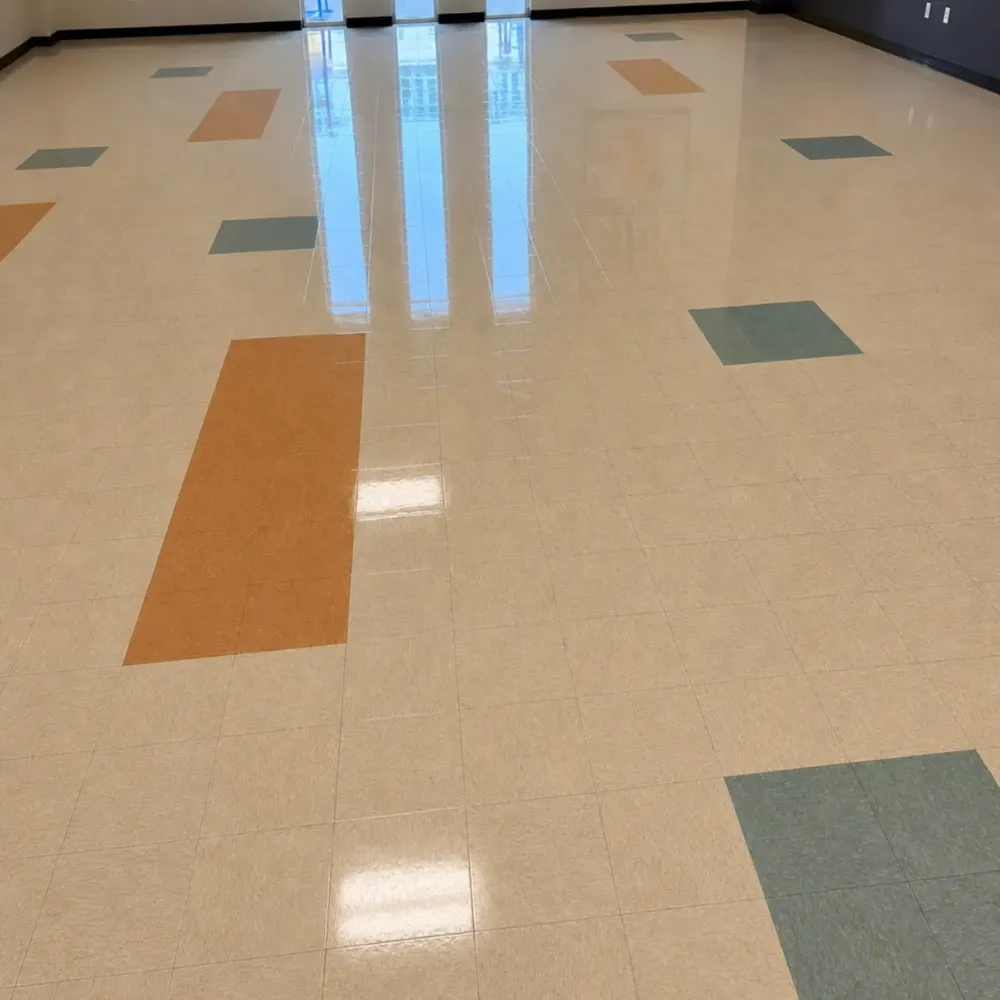
VCT (vinyl composition tile) needs a full strip and wax only when the finish is worn through, badly soiled or scratched. In between, regular scrubbing and recoating keeps the shine. Armstrong's VCT maintenance instructions call for 3 to 5 coats of floor polish, and say to buff, spray buff or burnish while that base of polish is still there.
That's why a good VCT plan has two speeds. The periodic visit is a scrub and recoat: the floor is machine scrubbed, then fresh coats of finish go on top of the base that's still sound. The restorative visit is a full strip: the old finish comes off down to the tile, and new coats go on. Stripping costs more and takes the room out of use longer, so the goal is to scrub and recoat often enough that you rarely need it.
Daily care decides how long both last. Armstrong recommends walk-off mats at every entrance to control grit, and dust mopping or vacuuming before any wet cleaning. Grit is what wears through finish, so the mats and the dust mop do more for your budget than almost anything else on the list.
Hank's Carpet Cleaning strips and waxes VCT for businesses, schools, churches and other commercial spaces across DFW. Because every floor's condition is different, VCT work is quoted after the free walkthrough.
What about tile, grout, vinyl plank and stone?
Hard floors other than VCT each have their own periodic job, and they belong in the same plan so one visit can cover them. A daily damp mop keeps the surface tidy, but textured vinyl plank, tile and grout hold onto grime that only a machine scrub lifts out.
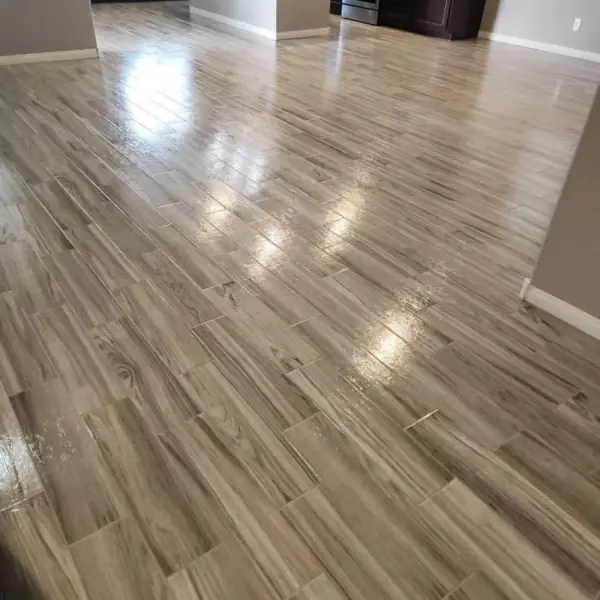
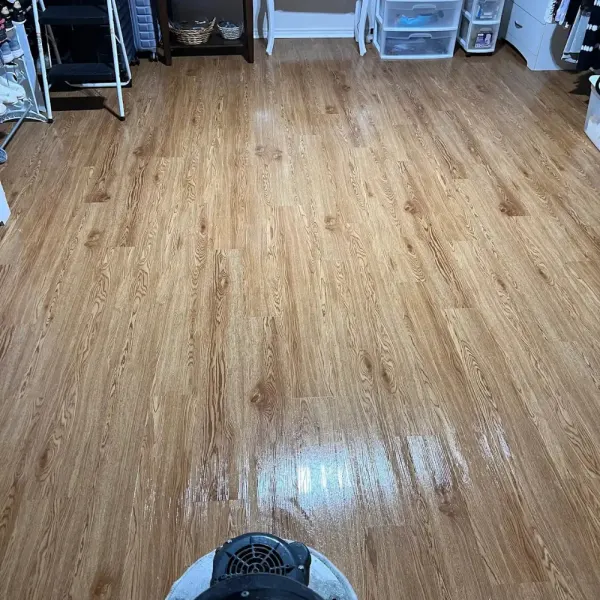
- Luxury vinyl plank (LVP): machine scrubbing with an orbital floor machine and a microfiber pad pass. This is the floor in most new daycares and offices.
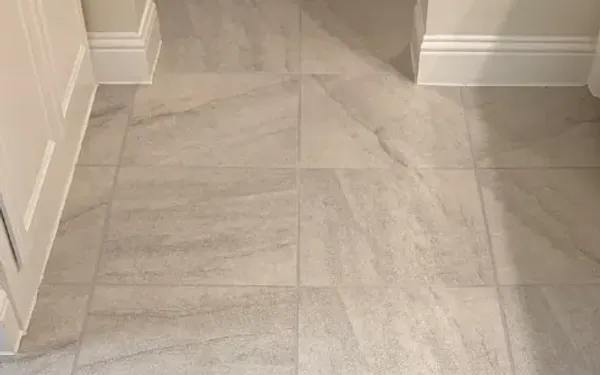
- Ceramic and porcelain tile: high-pH grout cleaning and hot-water extraction for lobbies, restrooms and kitchens.
- Grout that's stained beyond cleaning: grout color sealing restores one even color, with a seal that lasts 5 to 10 years with proper care.
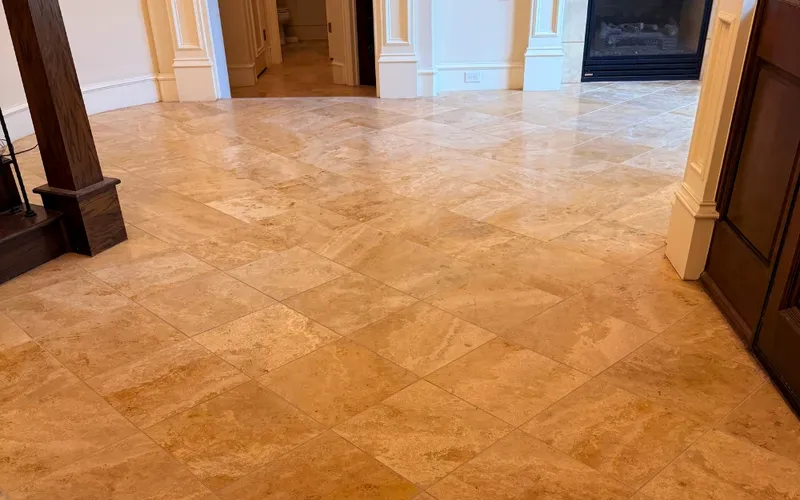
- Natural stone (marble, travertine): cleaned, polished and sealed for lobbies and entryways.
- Sealed or polished concrete and epoxy floors: deep cleaning and degreasing for shops, showrooms and warehouses.
- Upholstered seating: restaurant booths, waiting-room chairs, lobby furniture and church pew cushions, cleaned with hot-water extraction.
What does a commercial floor maintenance plan cost in DFW?
There's no single per-square-foot price for a commercial plan, because the cost depends on the floor types, the square footage, the condition and how many visits a year. But public bids show what the very largest buyers in DFW pay, and they're a useful starting point once you know why your building won't see those numbers.
In 2024 Dallas County bid out standard carpet cleaning for about 938,549 square feet a year. The four bids for the first year ranged from $0.075 to $0.25 per square foot. The same year, a Tarrant County public agency bid out floor care for its buildings, and the bids came in at:
Dallas County bid tabulation 2024-022-7009, carpet and upholstery cleaning (PDF) · MHMR Tarrant ITB 24-003 floor care bid tabulation (PDF)
- Quarterly VCT maintenance: $0.12 to $0.60 per square foot.
- Annual VCT full strip and wax: $0.18 to $0.50 per square foot.
- Carpet cleaning: $0.15 to $0.26 per square foot.
- Ceramic or porcelain tile and grout restoration: $0.18 to $0.93 per square foot.
- Minimum call charge: $50 to $350 per visit.
Why won't a small building get county bid prices?
A small building won't see county prices because those prices are spread over hundreds of thousands of square feet a year, while a church, daycare or dental office pays for one crew's trip, setup and time no matter how small the floor is. The bids above show it too: even the county bidders listed minimum call charges, from $50 to $350 a visit.
Think about what a visit actually takes. The crew drives out, unloads and sets up equipment, moves chairs and furniture, works around built-in pieces, and puts everything back. On a 900,000-square-foot contract that overhead disappears into the per-foot price. On a 3,000-square-foot building it's a real part of the job.
That's why the honest way to budget a small or mid-size building is per visit, not per foot. Ask for a fixed price for each visit that covers your zones, and compare plans on what one full year costs, not on a per-foot number that was built for a county courthouse.
How do you build a yearly floor care budget?
A yearly floor budget is the price of each kind of visit times how many of those visits you need in a year, plus a little room for the unexpected. Here's the order we'd work in:
- 1. Walk the building and list each zone, its floor type and its traffic level.
- 2. Decide which zones need periodic professional care and how often: quarterly for heavy-traffic zones, twice a year or yearly for lighter ones.
- 3. Decide whether any floor needs a restorative reset first, like a strip and wax or a heavy carpet cleaning. That's the initial visit.
- 4. Get a fixed price for the initial visit and for each recurring visit, in writing.
- 5. Add them up: the initial visit plus each recurring visit for the year. That's your floor budget.
- 6. Hold back a small line for spills, a flood or an event that needs an extra visit.
- 7. Put the dates on the calendar now, around your busy seasons, so the visits happen instead of slipping.
What does a real plan look like? A Southlake daycare
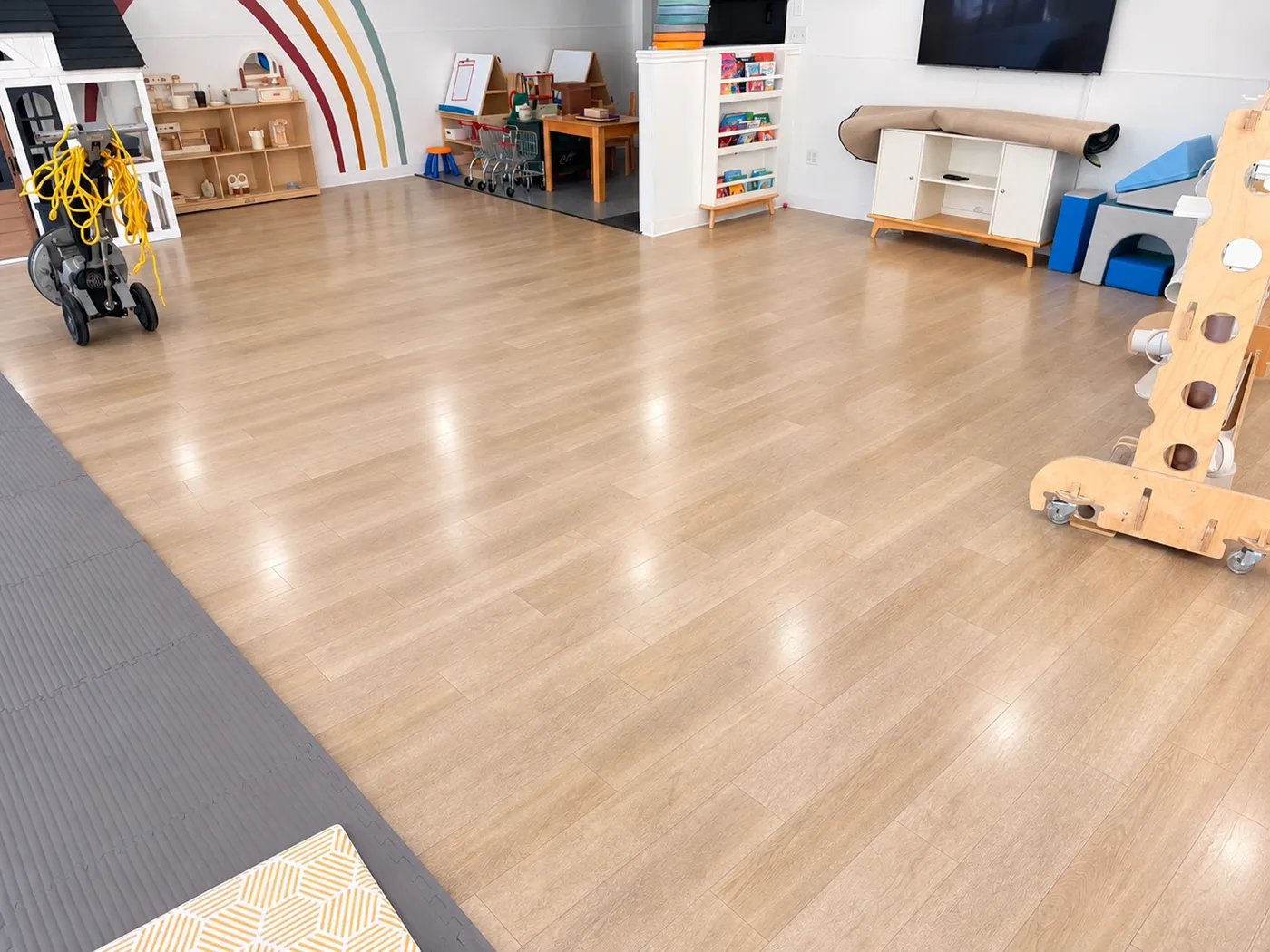
Kids Inn Child Care Center in Southlake is a good example of a simple plan that works. Before its grand opening, we deep cleaned about 1,600 square feet of commercial vinyl plank and the foam play mats under the indoor playground. That was the initial visit: it reset floors that had been through furniture deliveries, murals and play equipment going in.
After that, Kids Inn has us back every quarter. In a childcare center the floor is where the day happens, so quarterly visits keep the vinyl plank and the play mats looking like opening day instead of sliding back to dull and grimy. Between visits, daily sweeping and damp mopping keep the surface tidy, and the quarterly visit does the machine scrubbing a mop can't.
That's the whole structure of a plan in one building: an initial visit, a recurring visit on a set schedule, a clear split between what the staff does and what we do, and a price that stays the same for the year.
Fixed price per visit, per square foot, or hourly: which is better?
For a small or mid-size building, a fixed price per visit is usually the easiest to budget, because you know the cost of every visit before the year starts. Each pricing model has a place, though:
- Fixed price per visit: you know the exact cost of each visit and the year. Best for recurring plans in buildings up to a few tens of thousands of square feet. It depends on a careful walkthrough, so the scope is right.
- Per square foot: easy to compare on very large contracts. On small buildings it hides the minimum charge, and the final bill can move if the measured area changes.
- Hourly: works for odd jobs and repairs where the scope is truly unknown. For a regular plan it puts the risk of a slow crew on you.
What do we put in a Hank's Floor Care Plan?
Our Floor Care Plan starts with a free walkthrough. We walk your building, look at every floor, and leave you a written plan: what each area needs, how often, and a fixed price for each visit. You get the price the same day, and repeat visits keep the same price for 12 months.
The plan has no contract fees, and you can cancel after the first visit if you're not happy. We're insured, every job is backed by our 30-day satisfaction guarantee, and our cleaning is safe for kids and pets, which matters in nurseries, classrooms and children's wings.
We price commercial jobs per job, based on the floors, the size and their condition, not per hour. One crew handles carpet, tile and grout, vinyl plank, VCT strip and wax and upholstered seating, so it's one company, one visit to plan around and one written price for the building.
How do you schedule floor care around a business?
Schedule floor care when the building is empty or the affected rooms are closed: after hours, on a weekend, or on a weekday between events. We schedule commercial jobs after hours and on weekends, and book online Monday through Saturday, with Sunday by special request only.
Dry time drives the schedule as much as the cleaning. Low-moisture carpet cleaning is typically dry in about an hour, so a classroom cleaned at the end of the day is ready long before the morning. Hot-water extraction needs about 4 to 6 hours, so those zones go last or before a day off. A VCT strip and wax takes the room out of use the longest, so it fits a weekend, a school break or a closed day.
- Churches: clean before the services that draw the largest crowds, like Christmas and Easter, and keep the date clear of rehearsals.
- Daycares and schools: quarterly lines up with the school year; big resets fit holiday breaks and summer.
- Offices: evenings or Saturdays, with the main entry and hallways on the most frequent schedule.
- Restaurants and salons: before opening or on the closed day, with tile, grout and booths in the same visit.
- Property managers and HOAs: common-area carpet and lobbies on a set schedule, plus single visits for move-outs.
What should you ask before you sign any floor care plan?
Ask for the scope, the price and the terms in writing before you sign. Whoever you hire, these questions keep a plan honest:
- Is the price fixed per visit, and how long is it locked?
- Exactly which rooms, floors and square footage does each visit cover?
- What's the plan for each floor type, and why that frequency?
- Are there contract fees, and what are the cancellation terms?
- Is the company insured?
- Are the products safe for kids, pets and people with sensitivities?
- When will the work happen, and how long until each area can be used again?
- What happens if a spot comes back after the visit?
- Does the price include moving furniture and resetting the room?
When is the best time to start a plan?
The best time to start is before your busiest season, so the initial visit resets the floors before the crowds arrive. For churches that's ahead of Christmas or Easter. For daycares and schools it's before a new term or an open house. For offices and stores it's before the holiday rush or a lease showing.
If the floors already look tired, start with the initial visit now and set the recurring dates from there. Waiting for the floors to get worse only makes the first visit bigger.
How to get a written Floor Care Plan for your building
Book a free walkthrough with the form at the bottom of this page, or call or text (817) 697-7500. Tell us your business, which floors you have and any dates to work around. We'll walk the building, write the plan and give you a fixed price for each visit the same day.
Hank's Carpet Cleaning is a family-owned company founded in Argyle in 2024, with an office in Southlake and 400+ five-star reviews. We clean floors for churches, daycares, schools, offices, restaurants, property managers and event venues across DFW, including Southlake, Keller, Colleyville, Grapevine, Fort Worth and the rest of North Texas.