

Commercial floor care guide · Published November 17, 2026
The short answer: how often office carpet should be cleaned
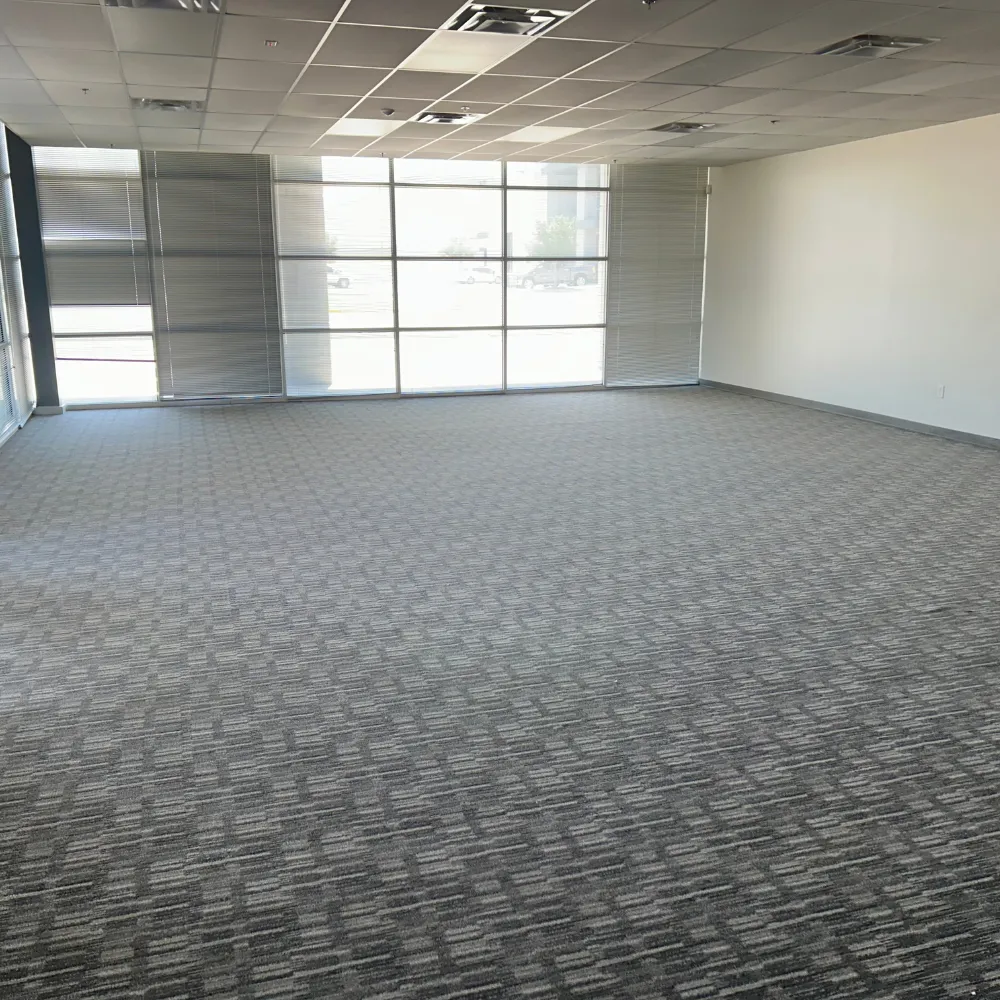
Office carpet should get a professional deep cleaning at least every 12 to 18 months, the Carpet and Rug Institute says, and busy zones need it far more often. At Hank's Carpet Cleaning we set each office's schedule by zone: entries and main hallways several times a year, reception and break rooms about twice a year, and private offices once a year.
That's the whole answer in one paragraph. The rest of this guide shows where those numbers come from, how to tell which traffic level each part of your office is in, what to do between professional visits, and what a real office schedule looks like. If you're asking about carpet at home, our home guide covers that: this one is for offices only.
Carpet and Rug Institute: commercial cleaning and maintenance · How often home carpet should be professionally cleaned
What does the industry standard say for commercial carpet?
The industry standard sets cleaning frequency by how many people walk across the carpet each day. FLOR, a commercial carpet tile maker, publishes the recommended frequencies from IICRC S100, the cleaning standard from the Institute of Inspection, Cleaning and Restoration Certification, in its commercial maintenance guide. Here's that chart in short:
FLOR Commercial Maintenance Guide, frequency chart per IICRC S100 (PDF)
- Light traffic (under 500 people a day): vacuum 1 to 2 times a week; interim cleaning 1 to 3 times a year; restorative deep cleaning 1 to 2 times a year.
- Medium traffic (500 to 1,000 a day): vacuum traffic areas daily and the rest 3 to 4 times a week; interim cleaning 3 to 5 times a year; restorative cleaning 2 to 4 times a year.
- Heavy traffic (1,000 to 2,500 a day): vacuum traffic areas daily and the rest 4 to 7 times a week; interim cleaning 6 to 12 times a year; restorative cleaning 3 to 6 times a year.
- Very heavy traffic (over 2,500 a day): vacuum traffic areas 1 to 2 times a day; interim cleaning 12 to 52 times a year; restorative cleaning 6 to 24 times a year.
- Every level: spot clean daily, or as soon as a spot is noticed.
Which traffic level is my office?
Most small and mid-size offices are light traffic overall, with one or two medium or heavy zones inside them. Count people the way the chart does: every trip across the carpet, not every employee. Twenty people who each cross the front entry, walk to the break room and back, and visit the restroom a few times can put a few hundred trips a day on one hallway, while the private office at the end of it sees a dozen.
That's why one frequency for the whole office is the wrong question. A suite with 15 people and steady client visits may have a heavy-traffic path from the door to reception, a medium-traffic main hallway and break room, and light-traffic private offices and conference rooms. Each zone gets its own schedule, and the visits cost less because the quiet rooms aren't cleaned on the schedule of the busiest path.
A zone-by-zone schedule for a typical office
For a typical office of 10 to 50 people, a professional schedule by zone looks like this. Use it as a starting point and adjust after the first year, based on how each area looks between visits.
- Front entry and the path to reception: professional cleaning quarterly, more often in a wet winter or if clients visit daily. Vacuum daily.
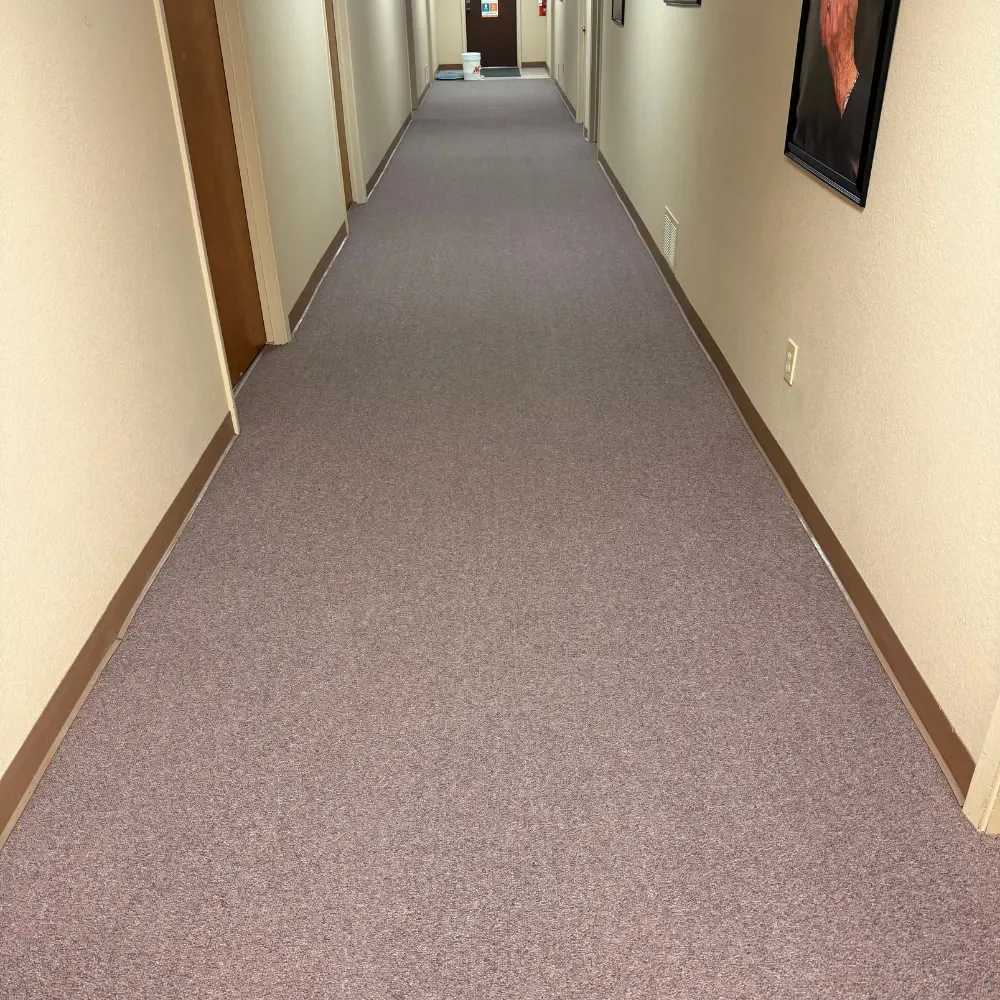
- Main hallways and the halls to restrooms and the break room: quarterly. Vacuum daily in the walking lanes.
- Reception and waiting area: every 3 to 6 months, depending on client visits. Spot clean the same day.
- Break room and kitchen edge: every 3 to 6 months. Coffee, soda and food spills make this the spot-cleaning capital of most offices.
- Open work areas and cubicle rows: twice a year. Vacuum the aisles daily and under desks weekly.
- Conference rooms: once or twice a year, plus a spot clean after catered meetings.
- Private offices: once a year. Vacuum weekly.
What's the difference between interim and restorative cleaning?
Interim cleaning keeps carpet looking good between deep cleanings by lifting soil from the top of the fibers, and restorative cleaning goes deeper to pull out soil that has worked its way down. FLOR's guide says interim cleaning, used regularly, can push back the need for restorative cleaning, and that restorative cleaning won't bring back the original look of carpet that's been neglected.
In practice, our main carpet method, low-moisture cleaning, fits the interim role well: it cleans the surface where traffic soil sits, and the carpet is typically dry in about an hour, so an office can be back to work the same day. When carpet needs a deeper rinse, or when a building's flooring maker calls for it, we use truck-mounted hot-water extraction, which usually dries in about 3 to 4 hours. The technician recommends the method on site, and a good schedule uses both.
Does the carpet maker have its own cleaning rules?
It may. Commercial carpet makers publish maintenance guides, and some name the cleaning methods they recommend, so check the guide and the warranty for your carpet before you set a schedule. Keep the invoices from each professional visit in your facilities file in case you ever need to show the carpet was maintained.
FLOR's guide, for example, says wet extraction is the only restorative method it recommends for its tiles. If your maker says the same, plan the restorative visits as hot-water extraction and use low-moisture cleaning for the interim visits in between. Tell us the brand on the walkthrough so the plan can follow its guide.
What should my staff or janitorial crew do between visits?
Daily vacuuming and fast spot cleaning do more for office carpet than any professional visit. Grit is what wears carpet out and makes traffic lanes go gray, so the goal between visits is to keep it from getting in and to pull it out before it's ground down.
- Mats inside and outside every entrance. FLOR's guide says interior mats should run at least six feet inside the door, and that 15 feet of matting removes about 80% of soil and moisture before it reaches the carpet.
- Vacuum the walking lanes daily with a brush-roll upright; vacuum the rest of the office on the chart's schedule for its traffic level.
- Blot spills right away; don't scrub. The Carpet and Rug Institute's rule is "Blot; don't scrub."
- Keep a small spot kit in the break room so coffee gets handled the minute it hits the carpet.
- Vacuum and clean the entry mats too. They're the busiest "carpet" in the building.
What does a real office job look like? A Flower Mound example
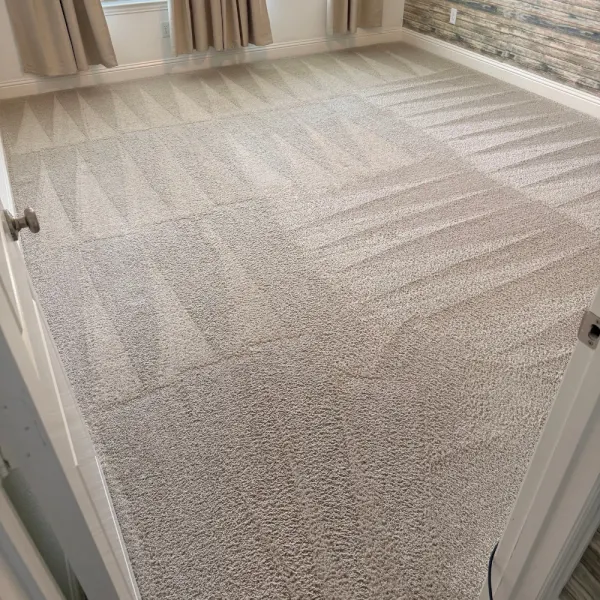
A professional office in Flower Mound's Lakeside area booked us before a round of client visits. We cleaned about 1,300 square feet of carpet across the reception area, the private offices and a meeting room.
The carpet showed the pattern we see in almost every office: normal wear along the main walking paths and almost none in the corners and under desks. There was no damage to fix. The cleaning evened out the walking lanes so the whole suite looked uniform again, and it fit into the office's normal maintenance schedule instead of becoming a one-time rescue.
That's the case for zone scheduling. The walking path from the door through reception is where an office shows its age first. Clean that path often and the rest of the suite can wait.
What about retail offices and shops with customer traffic?
Any space where customers walk in all day moves up a traffic level, and the entrance path moves up the most. A small shop near Grapevine's Historic Main Street booked us before the holiday shopping rush. We cleaned about 750 square feet across the customer area and the back office, with extra attention on the path from the front door.
For a shop, a title company or a medical office, plan the customer-facing zone on the heavy-traffic schedule and the back office on the light one. Time the visits before your busiest season, not after it.
When should office carpet be cleaned so work isn't interrupted?
Clean office carpet when the office is empty: evenings, Saturdays or a closed day. Hank's Carpet Cleaning schedules commercial jobs after hours and on weekends, so staff come back to finished floors.
With low-moisture cleaning the carpet is typically dry in about an hour, so an evening visit is done long before the morning. Hot-water extraction zones need a few hours more, so we put them first in the evening or before a weekend. Good times to schedule:
- Before client visits, an open house or an inspection.
- Before the holiday party season, and again after it.
- After a wet winter or spring, when entries have taken the most grit.
- Before a lease showing or at a move-out.
Signs your office carpet needs cleaning sooner
Don't wait for the calendar if the carpet is already telling you. Book a visit early when you see any of these:
- Gray or dark lanes from the door to reception, or down the main hallway.
- A visible line where the carpet changes color at a doorway or the edge of a desk.
- Spots that come back after the crew cleans them.
- Coffee and food stains piling up in the break room.
- An odor near the break room, restrooms or entry mats.
- Clients or staff mentioning the floors.
How Hank's builds an office carpet cleaning plan
We start with a free walkthrough. We walk the office, mark each zone's traffic level and carpet type, and leave you a written plan: what each zone needs and how often, with a fixed price for each visit the same day. Repeat visits keep that price for 12 months, there are no contract fees, and you can cancel after the first visit if you're not happy.
We're insured, every job is backed by our 30-day satisfaction guarantee, and our cleaning is safe for kids and pets. One crew handles carpet, tile and grout, vinyl plank and upholstered chairs, so the break room tile and the lobby chairs can go in the same visit. For the full picture of a building-wide plan and how to budget it, see our guide to commercial floor maintenance plans.
Book a free walkthrough with the form at the bottom of this page, or call or text (817) 697-7500. Hank's Carpet Cleaning is family-owned, founded in Argyle in 2024 with an office in Southlake, and has 400+ five-star reviews from homes and businesses across DFW.
Commercial floor maintenance plans: what to budget · Commercial floor cleaning and free walkthroughs