



Grout color sealing guide · Published November 25, 2026
The short answer: grout turns dark because it soaks things up
Grout turns dark because cement grout is porous. It soaks up soil from foot traffic, dirty mop water and cleaner residue, and it darkens for a while every time it gets wet. Hank's Carpet Cleaning fixes soiled grout with a truck-mount tile and grout cleaning ($0.90 per sq ft, $500 minimum) or, when cleaning isn't enough, grout color sealing.
The tile next to it usually stays light because most floor tile in DFW homes is glazed ceramic or porcelain, which barely absorbs anything. The grout line is the opposite. Tile maker Laticrete puts it plainly: "the grout joint between the tiles is usually very porous and generally made of a cement-based material." Whatever lands on the floor ends up in that joint.
So the real question isn't why grout gets dark. It's which kind of dark you have, because each one has a different fix. The rest of this guide walks through the five causes we see most on tile floors, how to tell them apart in about two minutes, and what actually fixes each one.
Laticrete: Sealing and caring for ceramic and porcelain tile and grout
What kind of dark grout do you have? A two-minute check
Walk the floor in daylight and look at where the dark grout is, not just how dark it is. The pattern tells you more than the color does.
- Darkest in walkways, in front of the sink, stove and fridge, and at doorways, lighter under furniture and along the walls: soil packed into the grout. This is the most common one by far. Fix: a deep tile and grout cleaning.
- Dark right after mopping, then lighter a few hours later: water in the grout. Normal for unsealed grout. Fix: nothing, or a sealer if it bothers you.
- Dark and slightly sticky or dull, and it gets darker faster after each mopping: cleaner residue holding dirt. Fix: a thorough rinse or a pro cleaning, then a change of cleaner.
- Dark in one damp spot that never really dries, like around a toilet base or in front of a leaky dishwasher: a moisture source. Fix: find the water first, then clean.
- One section a different shade from the rest, even when everything is clean: patched or replaced grout, or uneven sealer. Fix: grout color sealing to make every line one color.
Why does grout turn dark in walkways first?
Grout turns dark in walkways first because that's where the most soil lands and gets ground in. Every step carries in fine grit and oils from outside, and shoes push it down into the grout line, which sits a little below the tile surface.
Laticrete's care guide names the problem directly: "Sand, dirt, and grit may scratch your tile or build-up on your grout joint leading to discoloration." Kitchens get a second layer on top: cooking grease and food spills that settle on the floor and hold even more grit.
That's why the clearest sign of soiled grout is contrast. Pull a rug back or look under a dining table, and the grout there is often close to its original color while the lane from the garage door to the kitchen is several shades darker. Grout that started out light gray or almond doesn't turn dark brown on its own. It's soil.
If that's what you're seeing, our guide to whether professional grout cleaning really works covers the cleaning process in detail, including why the soil sits too deep for a mop to reach.
Can mopping make grout darker?
Yes. Mopping with dirty water is one of the most common reasons grout keeps getting darker even in a house that's cleaned every week. The mop picks up soil from the tile, and the grout line, sitting lower than the tile, catches the dirty water as the mop passes over it. When the water dries, the dirt stays in the grout.
Tile maker Daltile says it in one line in its ceramic tile care guide: "Never mop with dirty water as will just redistribute the dirt through the whole floor." The same guide says to "always use fresh water and rinse floor well after cleaning to remove soap residue."
Residue is the second half of the problem. Daltile also says it doesn't recommend cleaners that don't need rinsing, because "these can leave a residue that reduces slip resistance." That film doesn't only make tile slick. It's slightly tacky, so it grabs dirt from the next pair of feet, and the grout darkens faster after each mopping. Oily soaps and "shine" products tend to do the same thing.
Why does grout turn dark when it gets wet?
Grout turns dark when wet because the water fills its pores, the same way a dry sidewalk darkens in the rain. Unsealed cement grout drinks up mop water, and it can look a shade or two darker until it dries out again, usually within a few hours.
That's normal, and it isn't a sign of damage. It does tell you something useful, though: grout that soaks up clean water also soaks up dirty water, spills and grease. Laticrete's guide says grout joints "typically will need to be sealed and maintained properly to prevent stains and discoloration." A sealer slows down how much gets in.
Grout that stays dark long after the rest of the floor is dry is different. If one area never lightens up, look for a source of water: a toilet seal, the ice maker line behind the fridge, a dishwasher or a laundry hookup. Cleaning won't hold until the water stops.
Is dark grout on a floor mold?
Usually not. On kitchen, entry and living-area floors, the dark color in the grout is almost always soil, grease and residue rather than mold. Floor grout in dry rooms rarely stays damp long enough for anything to grow.
Bathrooms and laundry rooms are where it's worth a closer look, especially in a spot that stays damp, like around a toilet base. A tile and grout cleaning removes surface buildup, but it doesn't fix the moisture that let it form, so the water source comes first. We'll cover the mold-or-dirt question in its own guide.
Can harsh cleaners turn grout dark?
They don't fix it, and tile makers warn against them. Bleach, acids and other harsh cleaners aren't made for cement grout, and when the grout is dark from packed-in soil, bleach doesn't remove the soil that's causing it.
Laticrete's guide lists what to skip: "This includes not using acidic or alkaline cleaners, bleach, abrasives or ammoniated cleaners." For everyday mopping it recommends "a neutral cleaner that is specially formulated for ceramic, porcelain tile & grout."
One note on that: a neutral cleaner is the right tool for routine care, not for years of built-up soil. Deep cleaning soiled grout takes a professional grout cleaning solution, agitation, and hot-water extraction that pulls the dirty water back out of the joint.
Why is some of my grout a different color from the rest?
Grout that's a different shade in one area, even when everything is clean, usually has been patched, replaced or partly sealed. New grout almost never matches old grout exactly, and a sealer that went on unevenly can leave some lines darker than others. A deep cleaning won't change that, because those lines aren't dirty, they're just different.
That's the job grout color sealing is built for. After a deep clean, a color sealant is applied by hand to every grout line, so patched lines, original lines and old sealer spots all end up one even color. It's the same reason homeowners pick color sealing after a remodel, when a new cabinet color makes the old grout look off.
What actually fixes dark grout?
Match the fix to the cause. Here's the list from least to most involved, with real prices where we do the work. Prices are before Texas sales tax.
- Fresh mop water, a neutral cleaner and a clean-water rinse: stops grout from getting darker. It won't lift years of soil that's already packed in.
- Professional tile and grout cleaning: $0.90 per sq ft, $500 minimum (that covers up to about 556 sq ft). A 700 sq ft run of kitchen, breakfast area and hall comes to $630. This is the fix for soil, grease and residue, which is most dark grout.
- Clear grout sealer after the cleaning: slows down how fast clean grout soaks things up again. We quote it from photos or with the tile cleaning.
- Grout color sealing: one even, like-new color on every line, sealed against spills and stains. Bathrooms from $250, kitchens from $400, $500 minimum per visit; the tech confirms the final price on site. Every job comes with a 3-year labor warranty and a touch-up kit.
- Regrouting: for grout that's crumbling, cracked through or washing out of the joints. That's tile installer work, and our DFW clay soil guide explains when cracks point there.
- Fixing a leak: for one damp spot that stays dark. A plumber's job, and it comes before any cleaning.
Cleaning or color sealing: which one does your grout need?
Start with cleaning if the grout is evenly soiled and you liked its original color. A good cleaning brings most grout back several shades. It won't always bring it back to brand new, though, especially light grout that's been soaking up soil for many years, and it won't fix lines that are a different color for other reasons.
Choose grout color sealing when you want one even color you can count on, when the grout has patches or old stains that won't come out, or when you'd like a different grout color altogether. Color sealing always starts with a deep cleaning, so you're not choosing one instead of the other so much as deciding whether to finish with a color.
Not sure which you need? Text photos to (817) 697-7500: one of the whole room and one close-up of the darkest grout. We'll tell you which service fits, and color seal jobs book at least 7 days out, so it helps to ask early.
A real Flower Mound floor: dark entry grout, one even color
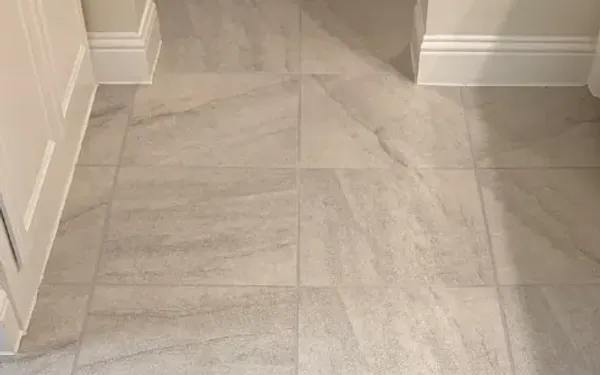
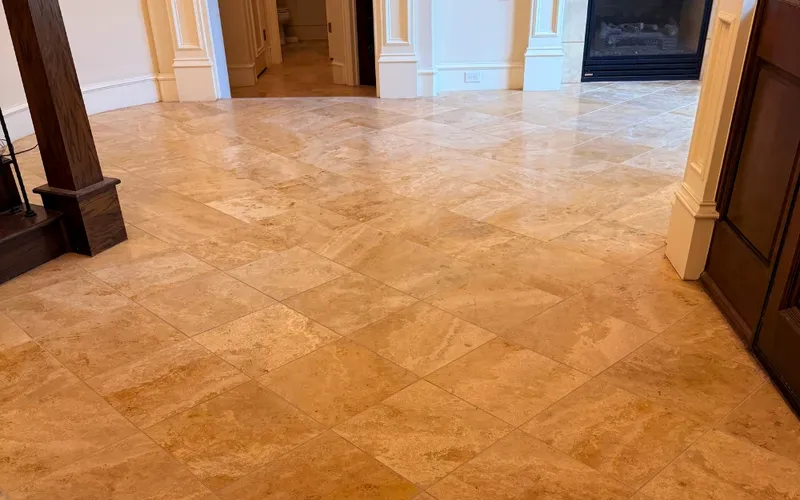
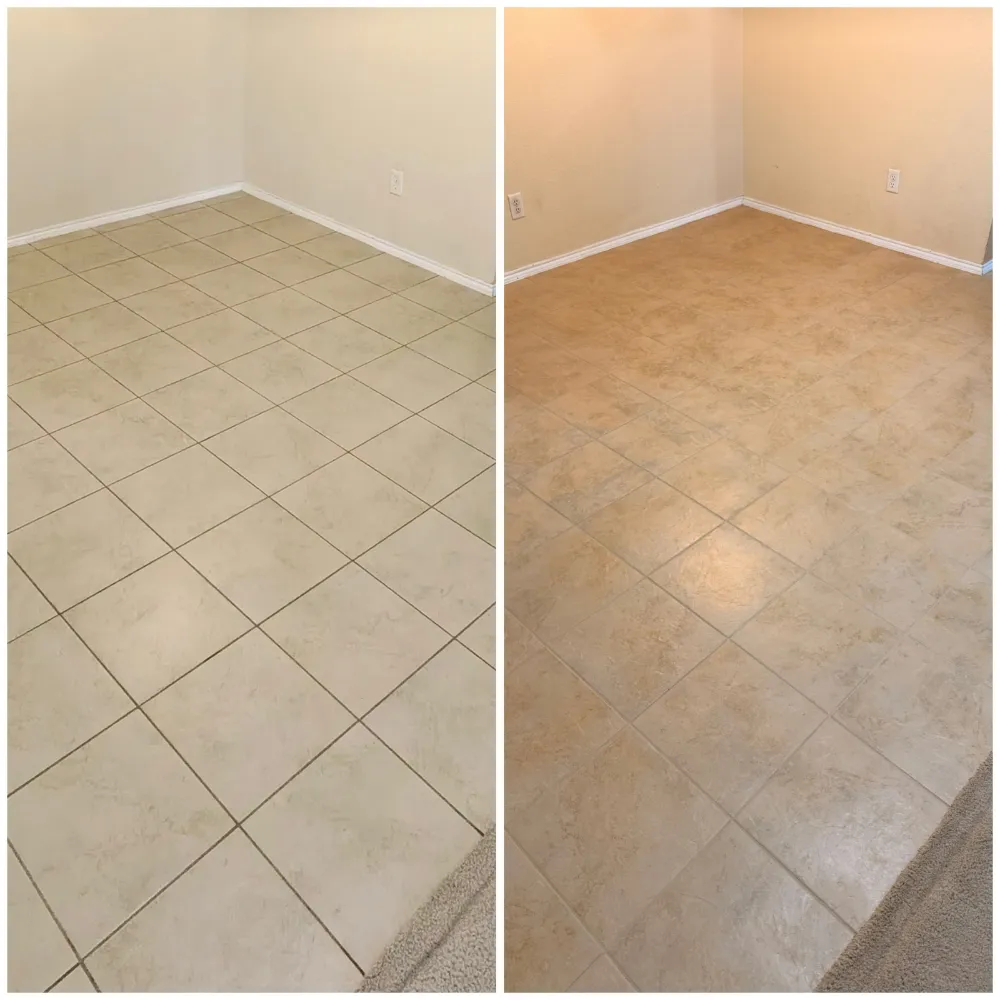
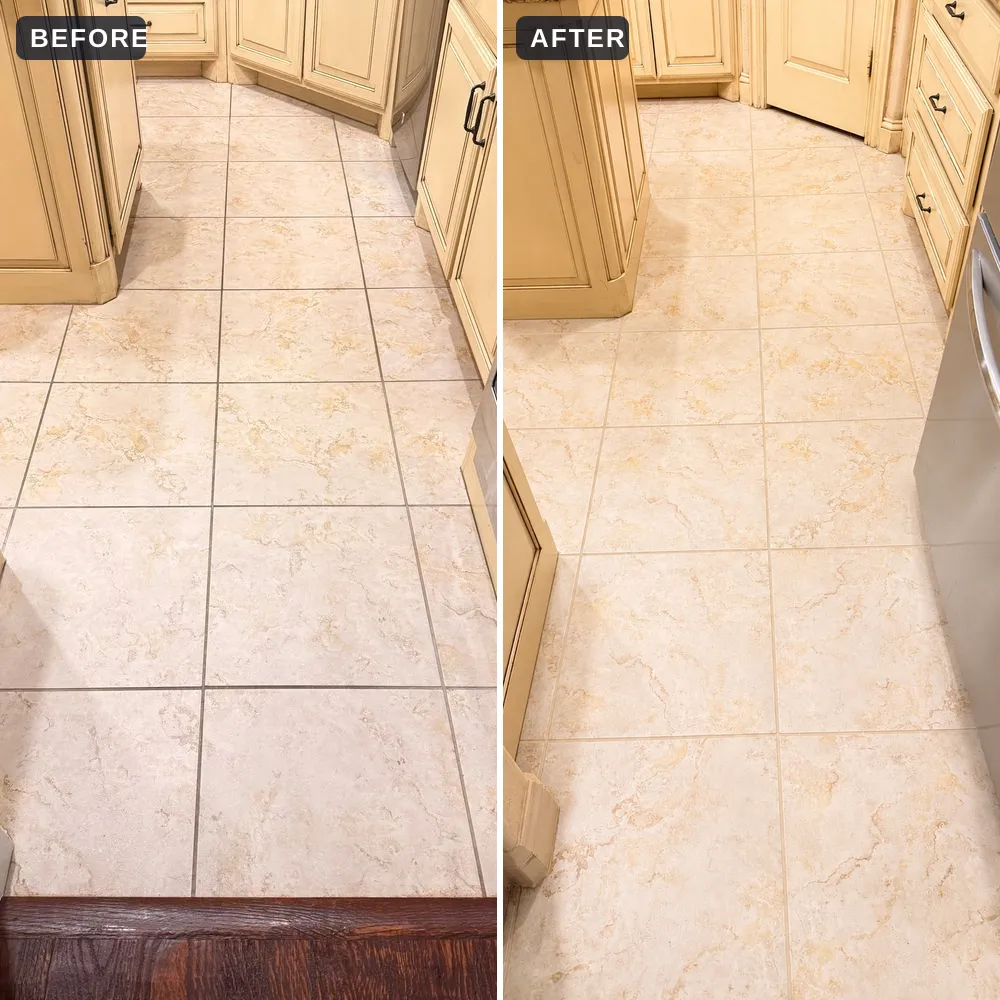
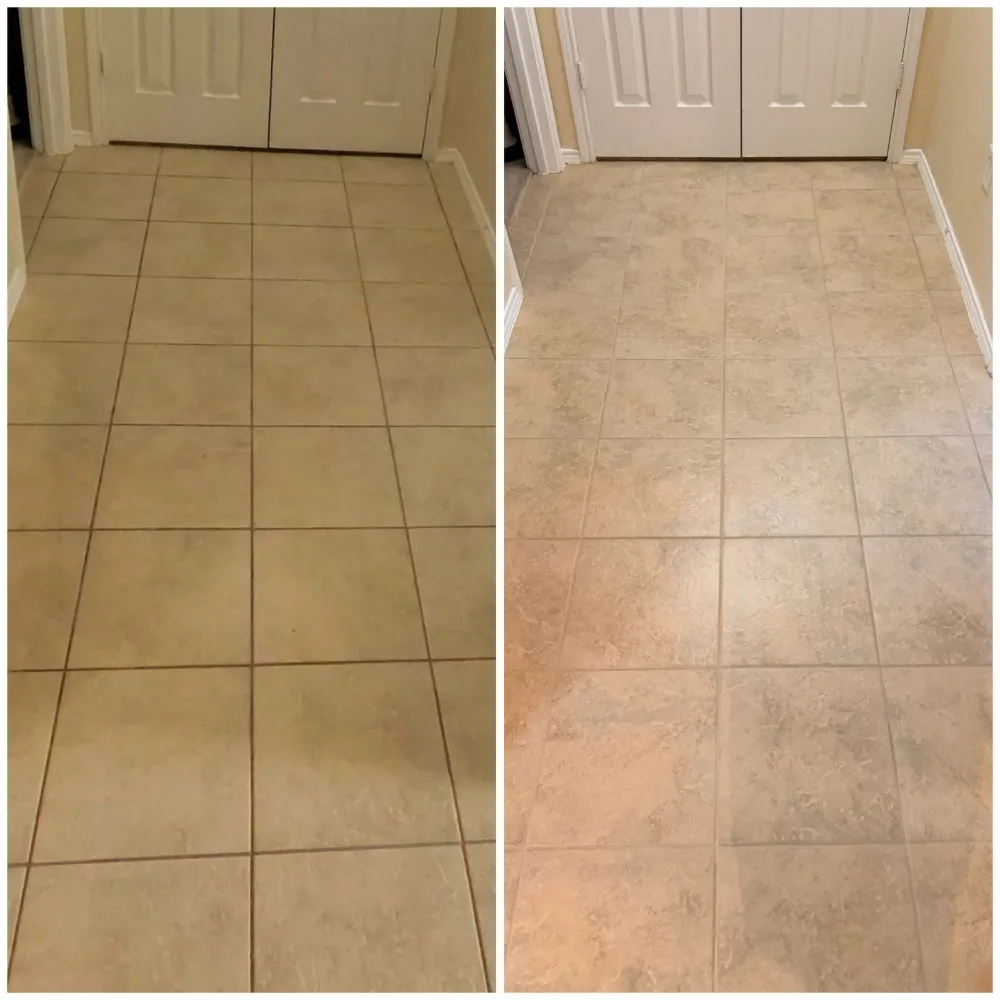
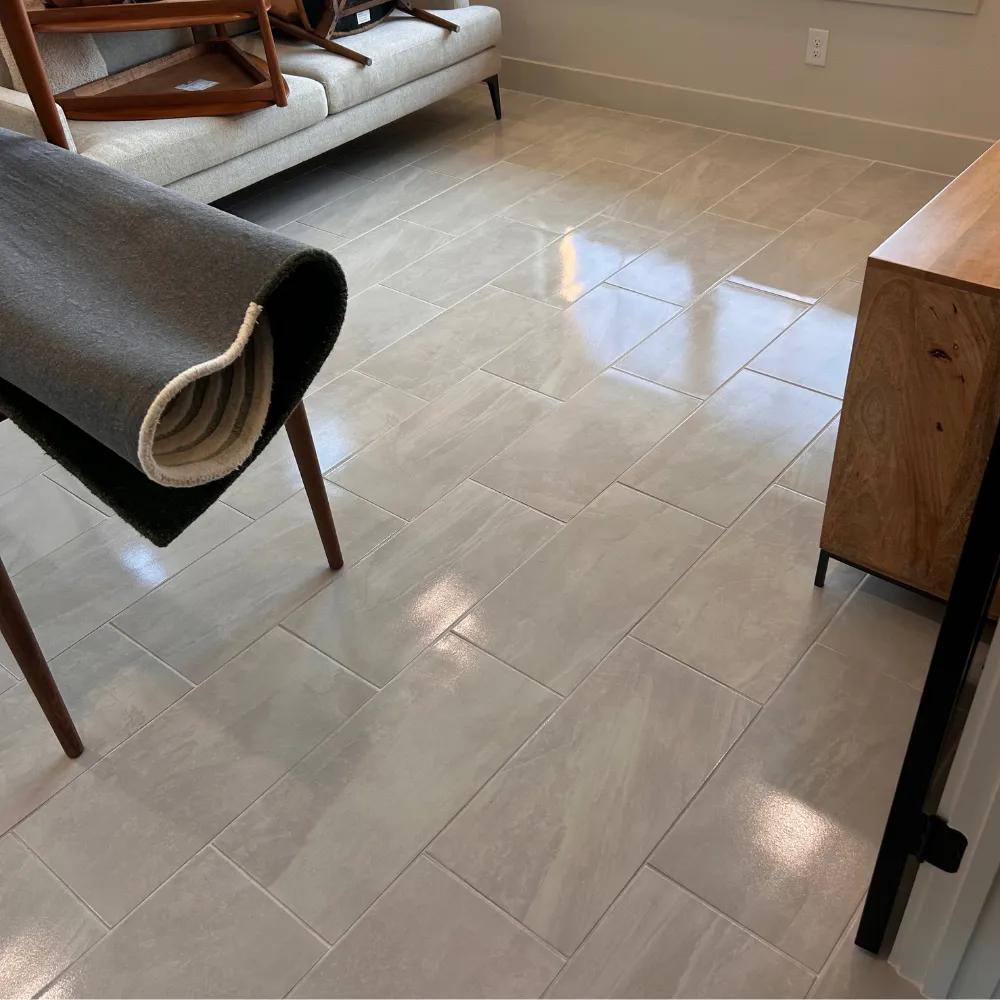
The photos at the top of this page and here are from a Flower Mound home we color sealed before the owners moved in. They liked their tile, a light beige set on the diagonal in one room and straight in the entry, but the grout had turned dark through the main walkways while the edges stayed lighter, the classic traffic-and-mop-water pattern.
We cleaned the grout lines first and then hand-applied a matching color seal across the entry and kitchen. Look at the before shots: the grout is darkest down the middle of the hall and lighter at the walls. In the after shots every line is the same light color, edge to edge, and the tile itself wasn't touched.
Doing it before move-in made the job simpler, with no furniture to work around, but it's the same process in a lived-in home.
How do you keep grout from turning dark again?
Keeping grout light is mostly about what goes into it. These habits make the biggest difference after a cleaning or a color seal:
- Sweep or vacuum before you mop, so you're not turning dry grit into mud.
- Use fresh water and change it as soon as it looks cloudy. For a big floor, that's more than once.
- Use a neutral cleaner made for tile and grout, in the amount on the label, and finish with a clean-water rinse.
- Skip bleach, vinegar and other acids, oily soaps and no-rinse shine products. On color-sealed grout, bleach and very harsh scrubbing also void the 3-year labor warranty; regular mopping is fine.
- Put mats at outside doors and in front of the sink and stove, where grease and grit land most.
- Wipe up spills while they're fresh, especially coffee, juice, grease and pet accidents.
Get dark grout fixed in DFW
Hank's Carpet Cleaning cleans tile and grout and color seals grout in homes across DFW, including Plano and Frisco, with 400+ reviews and a 30-day satisfaction guarantee. Tile and grout cleaning books online in a few clicks below, and grout color sealing is quoted from photos.
Call or text (817) 697-7500, or build your price online.
Tile and grout cleaning in Plano · Tile and grout cleaning in Frisco